
I appeared on an internal document described as being "anti-club" – but so did LFC's current director of first-team comms...
After growing up reading fanzines, I ended up editing one during some crazy times for Liverpool Football Club.

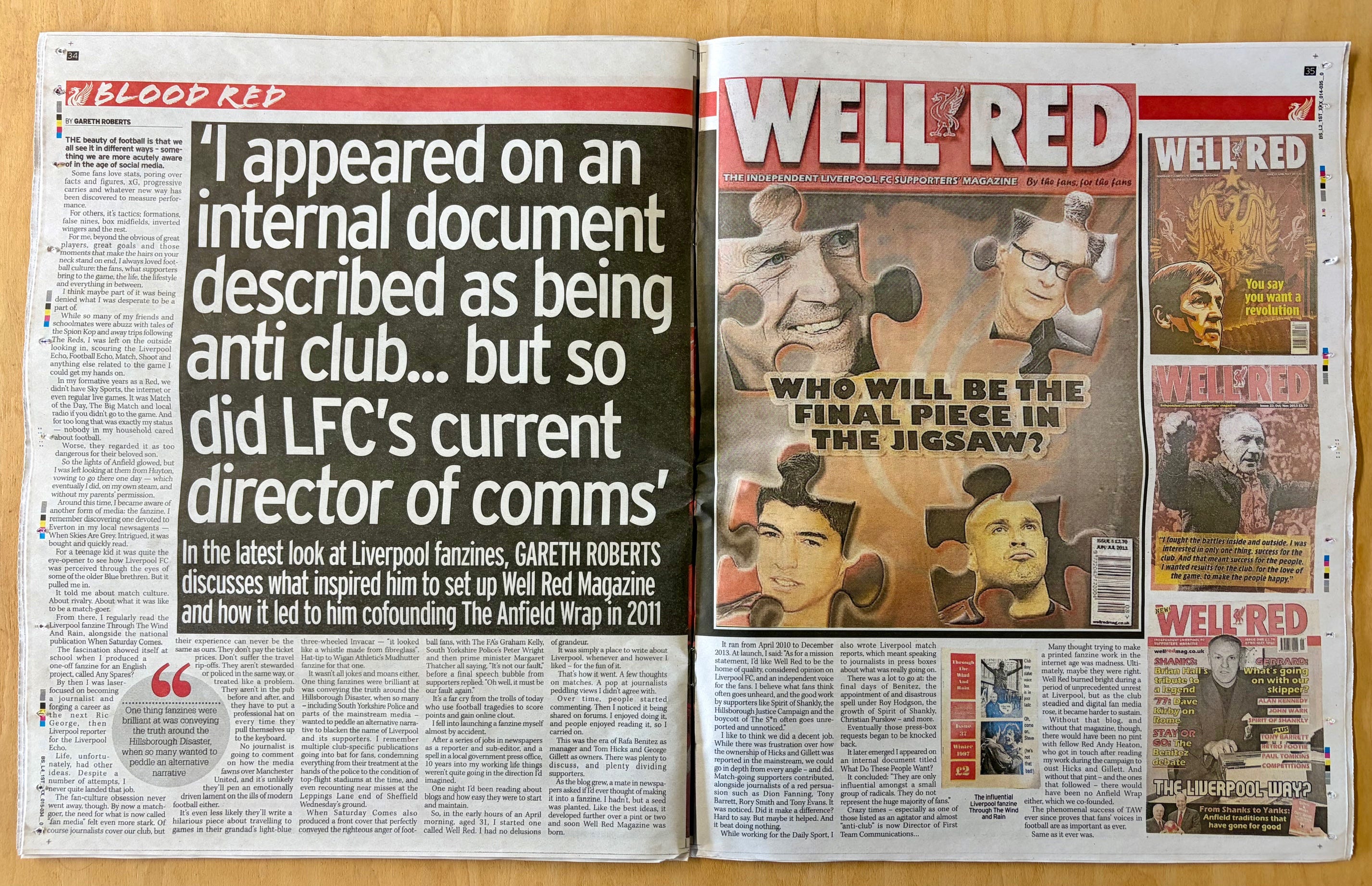
This piece appeared in the January 2026 edition of Blood Red – the monthly publication for Reds from The Liverpool Echo. You can buy it here.
THE beauty of football is that we all see it in different ways – something we are more acutely aware of in the age of social media.
Some fans love stats, poring over facts and figures, xG, progressive carries and whatever new way has been discovered to measure performance.
For others, it’s tactics; formations, false nines, box midfields, inverted wingers and the rest.
For me, beyond the obvious of great players, great goals and those moments that make the hairs on your neck stand on end, I always loved football culture: the fans, what supporters bring to the game, the life, the lifestyle and everything in between.
I think maybe part of it was being denied what I was desperate to be a part of. While so many of my friends and schoolmates were abuzz with tales of the Spion Kop and away trips following The Reds, I was left on the outside looking in, scouring the Liverpool Echo, Football Echo, Match, Shoot and anything else related to the game I could get my hands on.
In my formative years as a Red, we didn’t have Sky Sports, the internet or even regular live games. It was Match of the Day, The Big Match and local radio if you didn’t go to the game. And for too long that was exactly my status — nobody in my household cared about football. Worse, they regarded it as too dangerous for their beloved son.
So the lights of Anfield glowed, but I was left looking at them from Huyton, vowing to go there one day — which eventually I did, on my own steam, and without my parents’ permission.
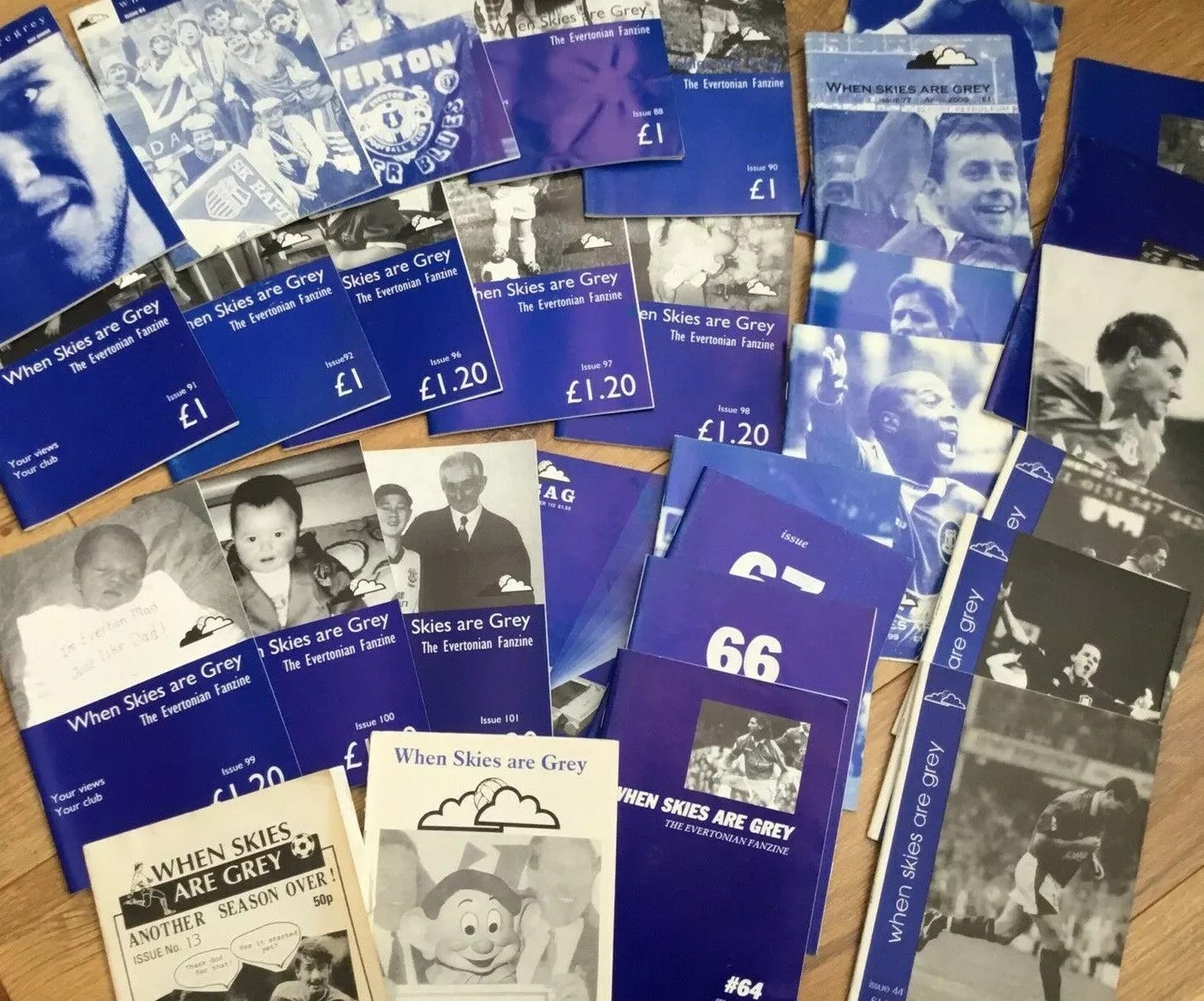
Around this time, I became aware of another form of media: the fanzine. I remember discovering one devoted to Everton in my local newsagents — When Skies Are Grey. Intrigued, it was bought and quickly read. For a teenage kid it was quite the eye-opener to see how Liverpool FC was perceived through the eyes of some of the older Blue brethren. But it pulled me in. It told me about match culture. About rivalry. About what it was like to be a match-goer.
From there, I regularly read the Liverpool fanzine Through The Wind & The Rain, alongside the national publication When Saturday Comes.
The fascination showed itself at school when I produced a one-off fanzine for an English project, called Any Spares?
By then I was laser-focused on becoming a journalist and forging a career as the next Ric George, then Liverpool reporter for the Liverpool Echo. Life, unfortunately, had other ideas.
Despite a number of attempts, I never quite landed that job.
The fan-culture obsession never went away, though. By now a match-goer, the need for what is now called “fan media” felt even more stark. Of course journalists cover our club, but their experience can never be the same as ours. They don’t pay the ticket prices. Don’t suffer the travel rip-offs. They aren’t stewarded or policed in the same way, or treated like a problem. They aren’t in the pub before and after, and they have to put a professional hat on every time they pull themselves up to the keyboard.
No journalist is going to comment on how the media fawns over Manchester United, and it’s unlikely they’ll pen an emotionally driven lament on the ills of modern football either.
It’s even less likely they’ll write a hilarious piece about travelling to games in their grandad’s light-blue three-wheeled Invacar — “it looked like a whistle made from fibreglass”. Hat-tip to Wigan Athletic’s Mudhutter fanzine for that one.
It wasn’t all jokes and moans either. One thing fanzines were brilliant at was conveying the truth around the Hillsborough Disaster, when so many — including South Yorkshire Police and parts of the mainstream media — wanted to peddle an alternative narrative to blacken the name of Liverpool and its supporters. I remember multiple club-specific publications going into bat for fans, condemning everything from their treatment at the hands of the police to the condition of top-flight stadiums at the time, and even recounting near misses at the Leppings Lane end of Sheffield Wednesday’s ground.
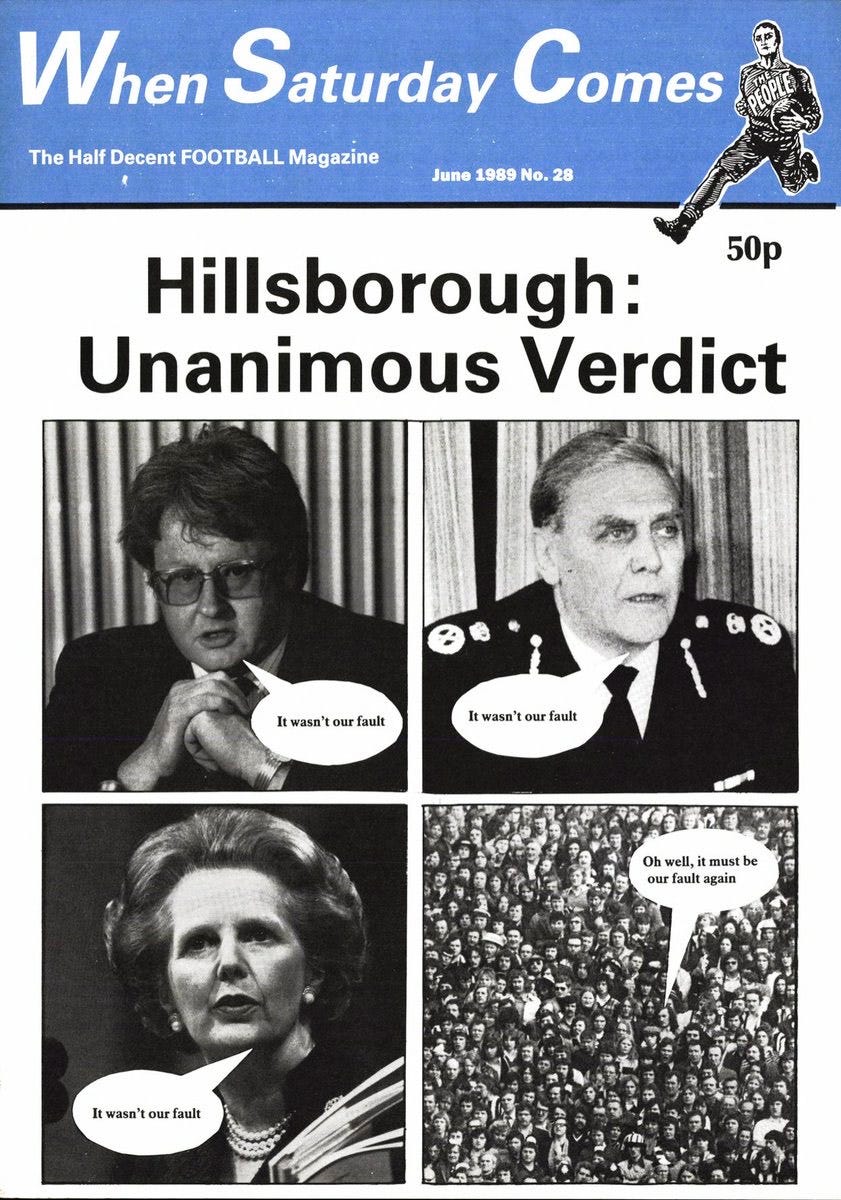
When Saturday Comes also produced a front cover that perfectly conveyed the righteous anger of football fans, with The FA’s Graham Kelly, South Yorkshire Police’s Peter Wright and then prime minister Margaret Thatcher all saying, “It’s not our fault,” before a final speech bubble from supporters replied: “Oh well, it must be our fault again.”
It’s a far cry from the trolls of today who use football tragedies to score points and gain online clout.
I fell into launching a fanzine myself almost by accident. After a series of jobs in newspapers as a reporter and sub-editor, and a spell in a local government press office, 10 years into my working life things weren’t quite going in the direction I’d imagined.
One night I’d been reading about blogs and how easy they were to start and maintain. So, in the early hours of an April morning, aged 31, I started one called Well Red. I had no delusions of grandeur. It was simply a place to write about Liverpool, whenever and however I liked — for the fun of it.
That’s how it went. A few thoughts on matches. A pop at journalists peddling views I didn’t agree with. Over time, people started commenting. Then I noticed it being shared on forums. I enjoyed doing it, and people enjoyed reading it, so I carried on.
This was the era of Rafa Benitez as manager and Tom Hicks and George Gillett as owners.
There was plenty to discuss, and plenty dividing supporters.
As the blog grew, a mate in newspapers asked if I’d ever thought of making it into a fanzine. I hadn’t, but a seed was planted. Like the best ideas, it developed further over a pint or two and soon Well Red Magazine was born.
It ran from April 2010 to December 2013. At launch, I said: “As for a mission statement, I’d like Well Red to be the home of quality, considered opinion on Liverpool FC, and an independent voice for the fans. I believe what fans think often goes unheard, and the good work by supporters like Spirit of Shankly, the Hillsborough Justice Campaign and the boycott of The S*n often goes unreported and unnoticed.”
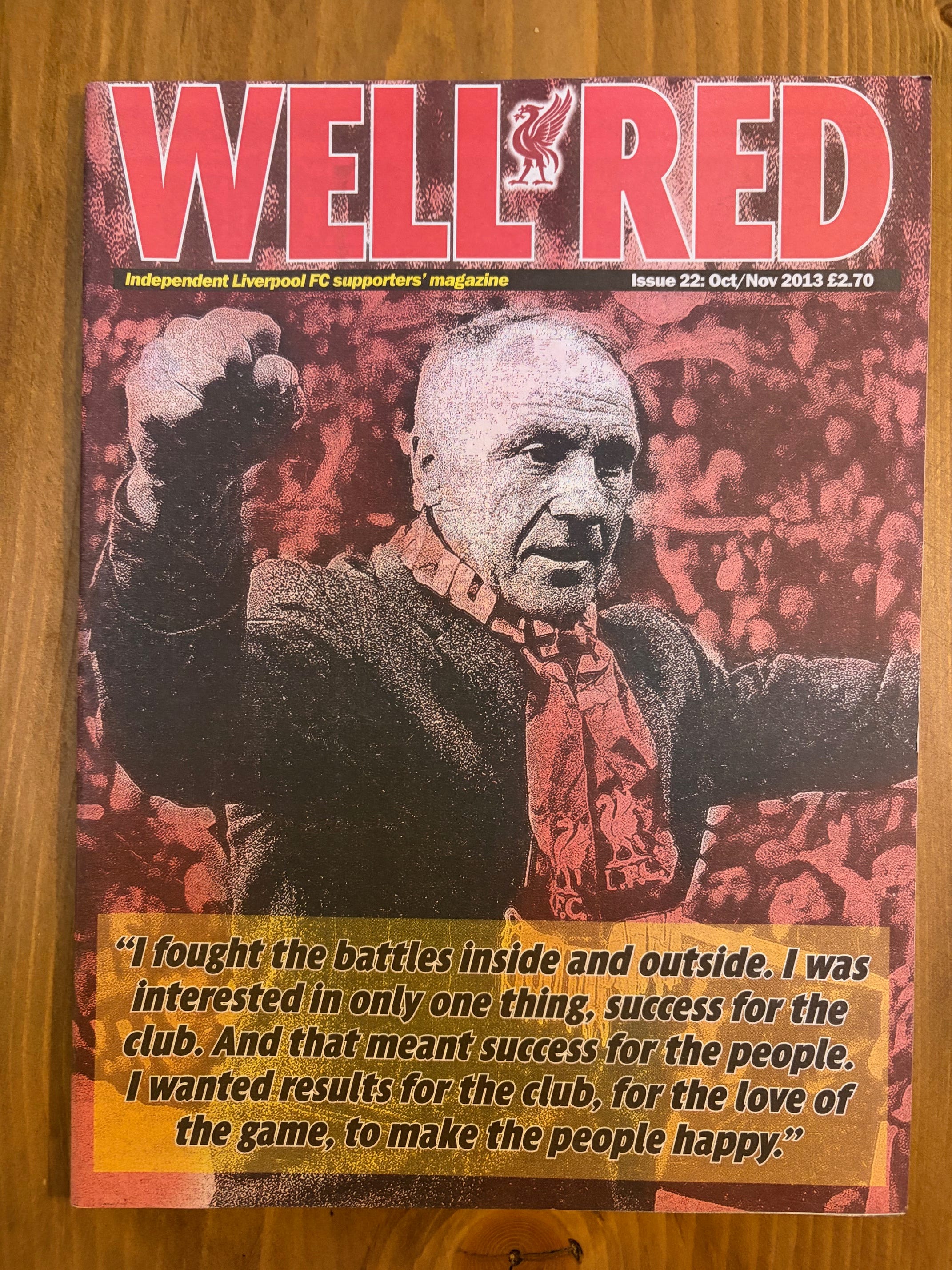
I like to think we did a decent job. While there was frustration over how the ownership of Hicks and Gillett was reported in the mainstream, we could go in depth from every angle — and did.
Match-going supporters contributed, alongside journalists of a red persuasion such as Dion Fanning, Tony Barrett, Rory Smith and Tony Evans. It was noticed. Did it make a difference? Hard to say. But maybe it helped. And it beat doing nothing.
While working for the Daily Sport, I also wrote Liverpool match reports, which meant speaking to journalists in press boxes about what was really going on. There was a lot to go at: the final days of Benitez, the appointment of and disastrous spell under Roy Hodgson, the growth of Spirit of Shankly, Christian Purslow — and more.
Eventually those press-box requests began to be knocked back. It later emerged I appeared on an internal document titled What Do These People Want? It concluded: “They are only influential amongst a small group of radicals. They do not represent the huge majority of fans.”
Crazy times — especially as one of those listed as an agitator and almost “anti-club” is now Director of First Team Communications…
Many thought trying to make a printed fanzine work in the internet age was madness. Ultimately, maybe they were right. Well Red burned bright during a period of unprecedented unrest at Liverpool, but as the club steadied and digital fan media rose, it became harder to sustain.
Without that blog, and without that magazine, though, there would have been no pint with fellow Red Andy Heaton, who got in touch after reading my work during the campaign to oust Hicks and Gillett. And without that pint — and the ones that followed — there would have been no Anfield Wrap either, which we co-founded.
The phenomenal success of TAW ever since proves that fans’ voices in football are as important as ever.
Same as it ever was…
Loved this. You’re very missed on the Anfield wrap, coming from this listener. Glad to see you on the Overlap now and glad I found your Substack. As someone who is more interested in the supporters side of the game, your voice is very refreshing.
Loved reading this Gareth! As an early reader (and occasional writer) for Well Red, I enjoyed reading more about the origins. Your Well Red days coincided with the peak time of me being on Twitter, back when it was fun and you could have just your little football corner to interact with. I don’t know how I stumbled on you, Andy, Karl, Neil and others back then, but I’m so glad I did. I hope Substack offers you a chance to do more writing again to go along with the new pod/videos. Keep up the great work, mate. It was lovely getting to see you for a pint when I made it over in December too. 🍻